By Victoria Dickerson
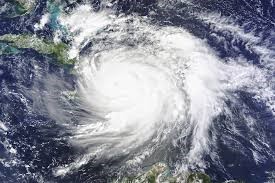
Severity of Hurricanes Helene and Milton exemplifies how global warming is negatively affecting our climate.
Hurricane Milton struck near Siesta Key, Florida on Oct. 9, almost two weeks after Hurricane Helene made landfall on Sept. 26 in Big Bend, Florida. Helene also impacted those living in North Carolina, South Carolina, Tennessee and Georgia. More than 200 people died from Helene, and at least eight have died from Milton.
The National Low Income Housing Coalition in its article “Join Upcoming National Call for Equitable Disaster Housing Recovery for Hurricanes Helene and Milton” stated, “Parts of Georgia…suffered from hurricane force winds that felled trees, damaged roofs, and brought down powerlines. Hurricane Milton, a historically powerful hurricane, flooded Florida communities and spawned a barrage of deadly tornadoes.”
Residents of the American Southeast aren’t the only ones impacted by the hurricanes.
Decades of rapid population increase, Florida is the nation’s fastest-growing state, according to the U.S. Census Bureau’s Vintage 2022 population estimates. Even with environmental dangers, lots of people move and live there.
This means some residents in Las Vegas have friends or family affected by the hurricanes.
Melissa Giovanni, professor of physical science at College of Southern Nevada, said, “One of my dad’s cousins lost her house to flooding from Hurricane Helene. She is okay but the house is destroyed. We had other family in the Tampa area who had to evacuate ahead of Hurricane Milton, but they and their homes were safe from any damage.”
CSN student Lolita Perrudin said, “When I used to live in Florida, the hurricanes weren’t as bad. I was really young, but I just remember that they closed school for a week. It was preventive more than because of destruction.”
“We are experiencing more severe hurricanes in recent years than in previous recorded decades,” Giovanni said. “We do not necessarily see more hurricanes in a given season, but we are seeing more Category 4 and 5 storms.”
Stronger hurricanes have been linked to climate change. If the oceans continue to get warmer, then hurricanes as devasting as Helene and Milton will continue to happen.
CSN professor of physical science Dr. John Keller said, “In order for hurricanes to form, you need warm, moisturizing air. The Atlantic, where you get a lot of hurricane formation, is anywhere between 3 and 6 degrees warmer than it normally is.”
Greenhouse gases — carbon dioxide, water vapor, methane and nitrous oxide — also contribute to more catastrophic tropical storms. Most greenhouse gas emissions are caused by human activity.
“What we’re seeing is the higher the CO2 levels, the stronger the wind speed,” Keller said. “So, we tend to get more category fours and fives with all the CO2 that we’re pumping into the atmosphere.”
Due to Donald Trump’s re-election, it is doubtful environmental policies will take precedence in the next few years.
Professor Giovanni wished for another way. “We want to go back to having politicians in place who at least want to solve these problems and will listen to experts. And then once those people are in office, we keep the pressure on them to pass policies that will tax fossil fuel companies, make them pay for cleaning up from natural disasters and invest in clean energy.”




 Coyote Student News at the College of Southern Nevada